
There are indeed situations where it is better not to have a camera with you.
That's what happened to Alvaro Moisés Calderón and his companion Enrique. They are dedicated naturephotographers in their native El Salvador and in the exotic bird world of Central America. For that, they travel on rivers, to waterfalls, swamps, volcanoes and subtropical rainforests, often for days on end,laboriously and not without risk.
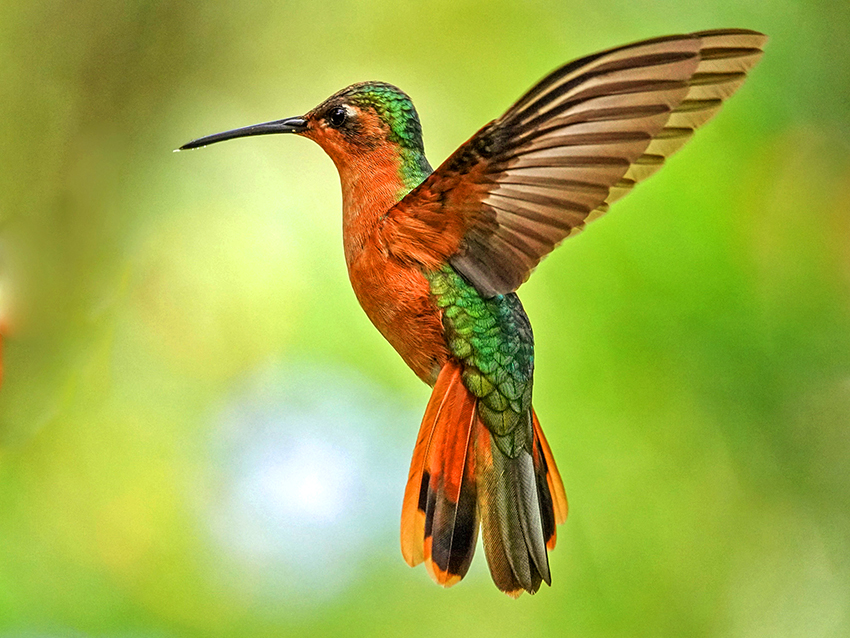
It happened on the day when they were looking for a rare hummingbird species. A hummingbird, of allthings, this tiny one somewhere in the sprawling wilderness!
They had roamed through the dense rainforest for many hours until finally a clearing opened up in frontof them. Before they ventured any further, they took off their backpacks and explored the terrain. Andthen it happened very quickly - suddenly swampy ground moved under Enrique's feet, he lost his balanceand landed in the mud in seconds. Immediately he felt the warm moisture that penetrated through theclothes to his skin, while his legs slowly sank into the swamp, a queasy feeling. Alvaro, still standing onsolid ground, immediately recognized the dicey situation and threw him two strong branches, so he wasable to lift himself up and finally save himself back to solid ground.
The binoculars could quite not escape the situation, completely muddy it hung on his body, not a prettysight. The sensitive camera would not have put up with that so easily. Luck in bad luck, this time it wasstill safe in the parked backpack.
Danger as normalcy
Alvaro sees such situations calmly. He knows all about surprises and imponderables. In this untouchedwilderness it can become critical in a matter of seconds. For the ornithologist, it is a treasure trove withdiverse varieties of birds of prey, shorebirds, hummingbirds and parrots. But it is also home to creaturesthat are better avoided, such as crocodiles, pumas, poisonous snakes, or the notorious boa constrictor,which can grow up to 4 meters long. And of course the always grumpy and intimidating iguanas, but theyare more harmless than they look.
Some subjects can only be reached if you venture into treacherous, swampy terrain or fording rivers with strong currents. Time and again, Alvaro has found himself on the borderline between ambition and risk, with photographic compromises having little place there.
There are other dangers in El Salvador - outside the wilderness. Crime is frighteningly high, gangs stalk covetous objects, and cameras are clearly one of them. So it's better to carry them invisibly in a simple bag, perhaps with a can of pepper spray. The country's double deuce is notorious.
Ballast sucks
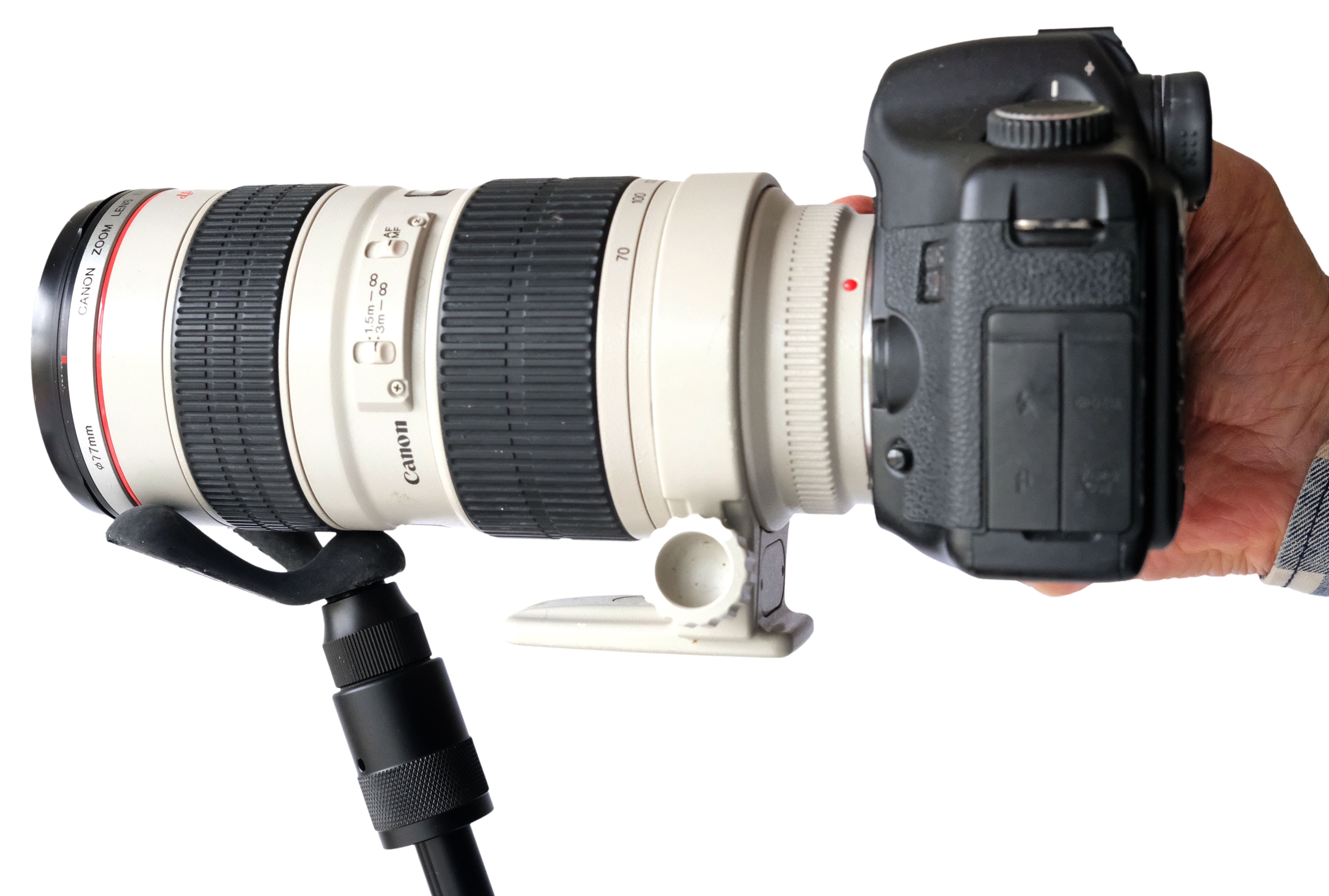
All these factors have finally shaped the luggage with which Alvaro travels. It is trimmed for lightness, inconspicuousness and spontaneity. Two water bottles per day, apples, fruit bars, rain jacket, knife, and a minimum of technology: compass, GPS connection, binoculars, camera with 600mm zoom, spare batteries, Steadify - that's it. No photo light, no tripod, because more luggage tends to hinder and reduce the chances with difficult subjects. The wilderness can be damn exhausting. Sometimes Alvaro is on the move for several days, sometimes alone, sometimes in pairs. Then a tent is also part of the equipment.
Alvaro has plenty of experience in the jungle. Here he moves slowly, registering every movement, every sound in the thicket, on the water, in the sky, and in the treetops. For his photos, mobility and spontaneity are vital.
Consequently, the technique must be absolutely uncomplicated. He therefore likes to rely on the automatic settings of the camera, because he often lacks the time for individual corrections in the case of some surprises.
Stabilization relaxes.
Sometimes a tripod would be helpful, stability is important with the long focal length, with the slow shutter speeds early in the morning or at dusk, or when patiently standing by the subject. Even a compact travel tripod would still be too cumbersome here, much too awkward for fast movements, and completely unsuitable on soft ground anyway. But Alvaro has easily solved this problem with Steadify. The small, lightweight part gives him optimal freedom and at the same time enough stability for camera and binoculars. Perfect for the wilderness, no matter what's going on.
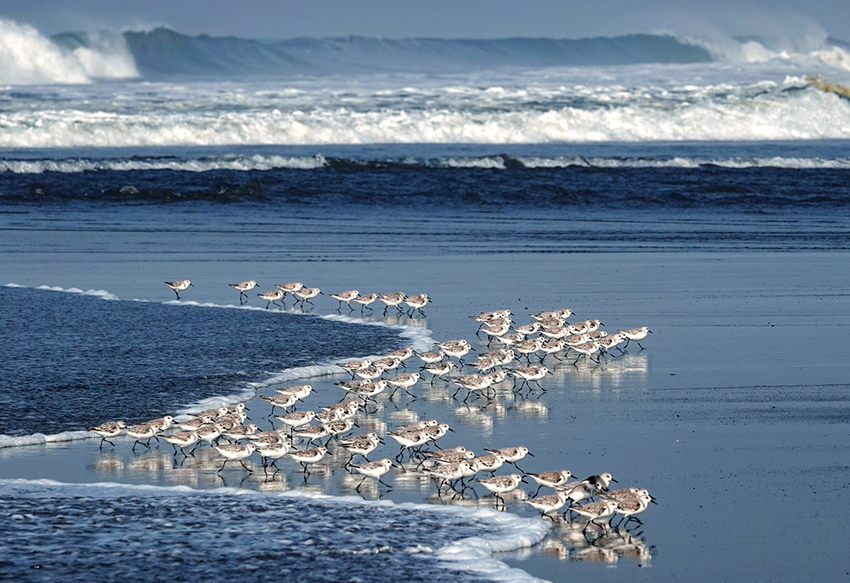
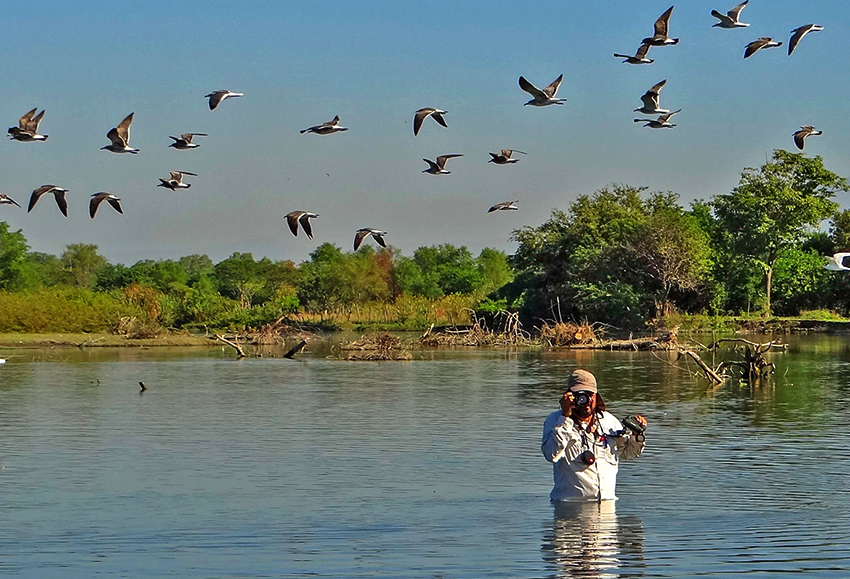
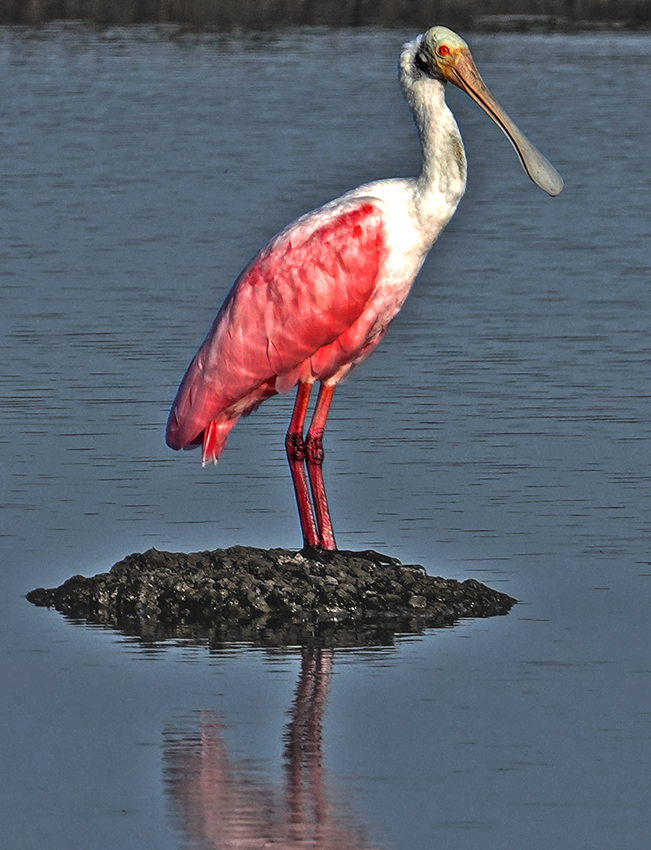
On the angular cliffs of the Pacific coast, for example. Far behind, the group of Sanderlings deftly picked goodies out of the sand between intervals of surf. Here, Alvaro wanted to get as close to the scene as possible without regard for rocks, wave action, or risk - again. Another time, he waded through a river and sank up to his waist in water, binoculars in one hand, camera balanced in the other. His companion on the bank held his breath. But there was just enough for a portrait of the shy Roseate Spoonbill, its pastel-colored plumage proudly shining in the afternoon sun.
The rivers and lakes of Central America are bird paradises. When Alvaro is out on the small boat, the unstable barge can be a real problem. The camera has to be held steady and totally still for a long time, no matter how strong the current and waves are. These are the most exciting moments, he tries to approach the shy creatures cautiously like a wildcat. When the flocks of pelicans, stilt-walkers, mud- runners finally do fly up, the camera must immediately swing with them. In such moments Steadify is unbeatable, Alvaro has many such stories to tell.
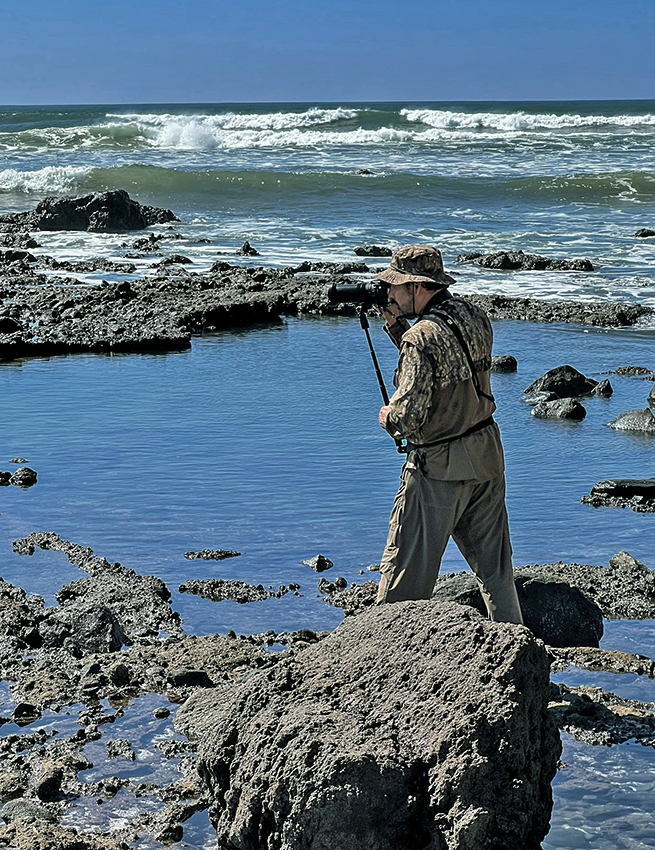
Experience for everywhere.
You could learn a lot from the way a nature photographer takes his pictures in the wilderness. Often the circumstances are similar: street scenes, sports, events, portraits also have their special, dynamic moments that make up the special photo. For this you have to be flexible, improvise, use technology skillfully without burdening yourself with it. Because the difference between jungle and civilization is actually very small. Hummingbirds are everywhere.
Alvaro Moisés Calderón - thanks for the glimpse into the exciting exoticism of El Salvador!

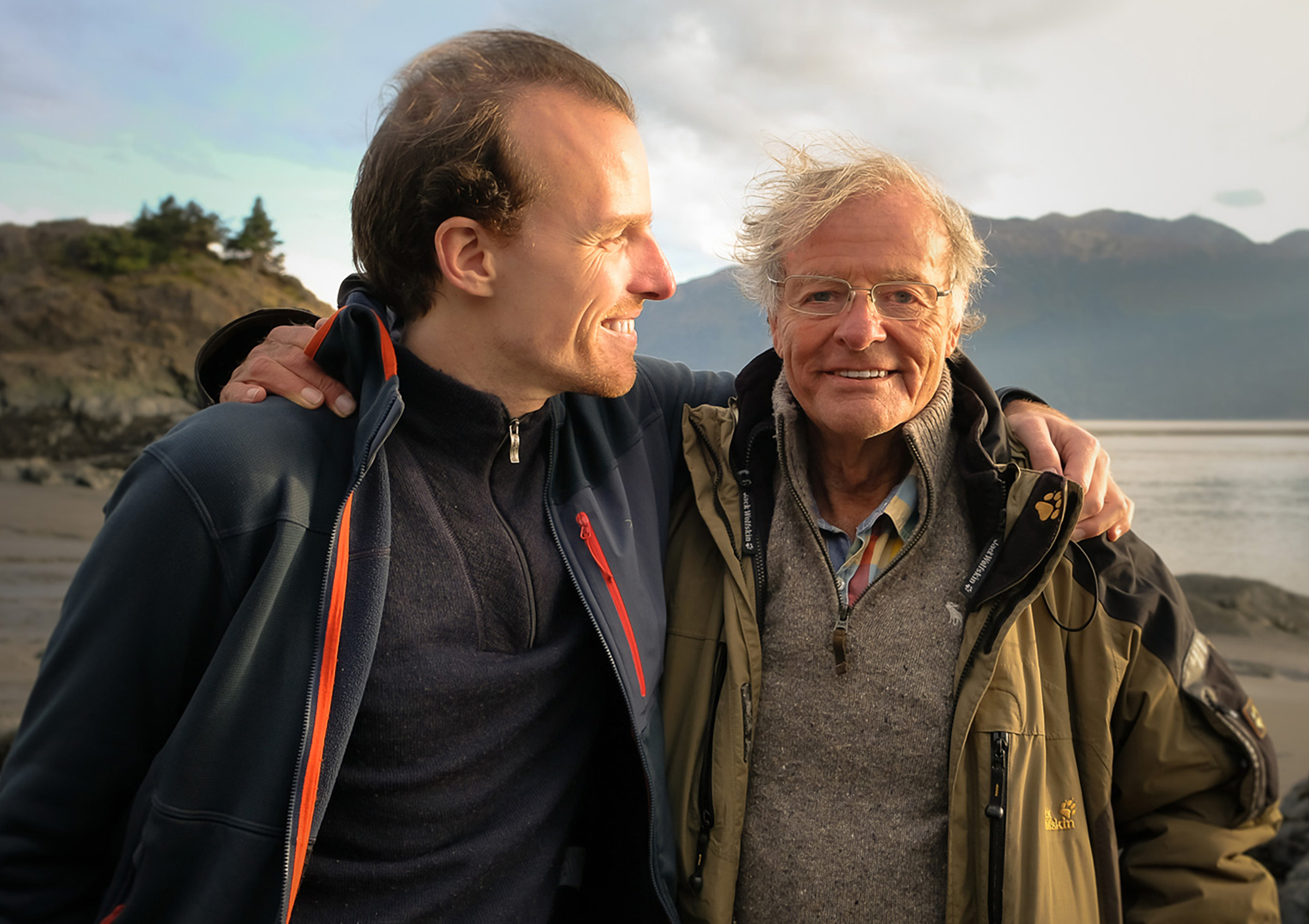
Co-founder of Steadify and passionate photographer whose images have been published worldwide for clients like Lufthansa, Panasonic, and GEO Magazine. Inspired by decades of fieldwork, Gert turned inventor.